
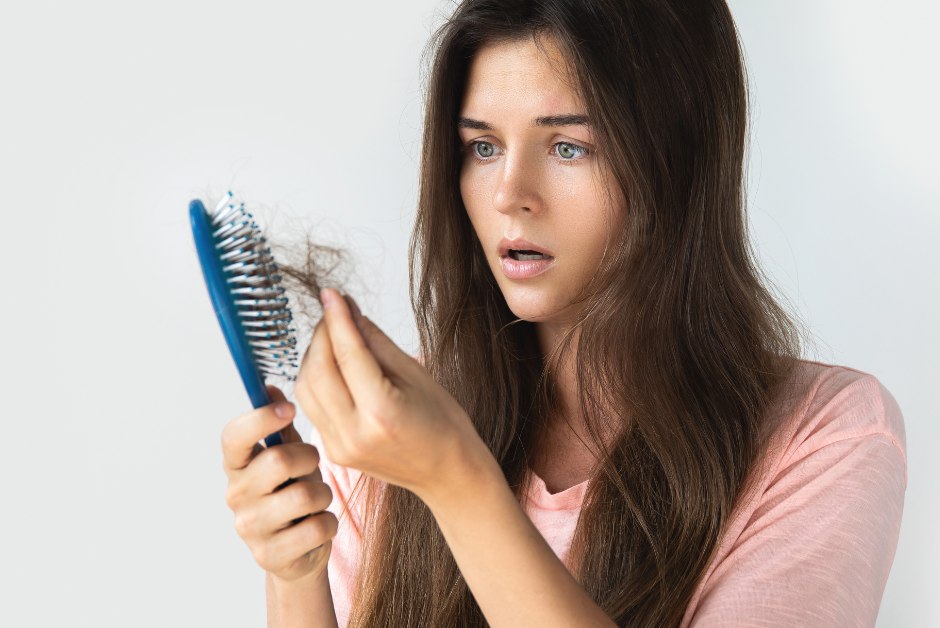
If you’ve noticed more hair in your brush or shower drain lately, you’re not alone.
About 40–50% of those who are postpartum experience noticeable hair loss. It usually begins between 3-5 months postpartum and, on average, people shed 80-100 hairs daily. Though some can shed up to 400 hairs/day. It can be unsettling to see so much hair falling out at once, but rest assured, it’s a temporary phase.
The Science Behind Postpartum Hair Loss
Estrogen plays a significant role in the hair growth cycle, particularly during pregnancy and postpartum. Understanding why postpartum shedding happens can help ease any anxiety around it.
During Pregnancy
-
Prolonged Hair Growth Phase (Anagen)
High levels of estrogen during pregnancy extend the anagen phase, the active growth phase of hair. This leads to thicker, fuller hair as fewer hairs shed. -
Reduced Hair Shedding
Estrogen slows the hair’s transition into the resting (telogen) and shedding (exogen) phases. This means you retain more hair than usual, giving the illusion of extra volume and thickness.
After Childbirth
-
Estrogen Levels Drop
After delivery, estrogen levels return to pre-pregnancy levels. This hormonal shift triggers more hair follicles to enter the resting phase simultaneously. -
Increased Shedding
About 2–4 months postpartum, the hairs that were retained during pregnancy begin to shed. This leads to noticeable hair loss, known as telogen effluvium.
This process, called telogen effluvium, usually peaks around month four. Once your hormones stabilize and the postpartum shedding period passes, your hair growth cycle resumes its normal pattern. Most people will see their hair return to its pre-pregnancy state within 6-12 months. However, every person is different; for some, it can take just 3 months, while for others, it may take longer than a year.
Managing Postpartum Hair Loss
There is no way to stop postpartum hair loss from happening entirely—it’s a natural part of the process. However, there are ways to make the experience easier to manage and minimize additional breakage:
-
Invest in a hair catcher for your shower drain. It will help prevent clogs and make cleanup easier when you notice more shedding.
-
Brush your hair thoroughly, but gently, before you shower. This helps remove loose strands ahead of time, reducing tangles and breakage when wet.
-
Use a wide-tooth comb and be gentle with your hair. Avoid pulling or tugging, especially when detangling.
-
Minimize heat styling and tight hairstyles. Avoid frequent blow-drying, straightening, or tight ponytails that put strain on fragile hair.
-
Consider wearing a bonnet at night or using a silk pillowcase. This helps reduce friction and prevent additional breakage while sleeping.
-
Try getting layers, bangs, or explore wearing wigs. A fresh cut can create the appearance of volume, and wigs (with silk-lined or satin wig caps) offer a simple styling solution.
-
Get a lint roller. You’ll find strands of hair everywhere—on your clothes, couch, and even in your baby’s tiny fingers. A lint roller makes quick cleanup easier.
When to Talk to Your Doctor
While postpartum hair loss is a normal experience, there are times when checking in with a healthcare provider is a good idea:
- If hair loss continues beyond one year postpartum.
- If you notice bald patches or thinning in specific areas rather than all over.
- If you experience other symptoms like fatigue, mood changes, or changes in skin health.
Thyroid imbalances and nutrient deficiencies (such as iron or vitamin D deficiency) can sometimes cause prolonged or excessive shedding. If something feels off, trust your instincts and get checked out.
Postpartum hair loss can feel like yet another unexpected change in your body, but it’s temporary. Your body is adjusting after carrying and delivering a baby—an incredible feat. In the meantime, take small steps to care for yourself and your hair, be patient with the process, and get your vacuum ready!

Share:
To Bathe or not to Bathe? Is Bathing Your Newborn Necessary?
Debunking Myths: The Truth About Water and Milk Supply